
A fixed-location salon
Ask about leased-space obligations, client slip-and-fall exposure, overnight holding, equipment and interruption after insured property damage. Give the insurer the actual premises and services.
For a grooming business, compare liability, animal-in-care protection and the risks of your actual workplace. A cheap pet health policy is not a substitute for commercial coverage.
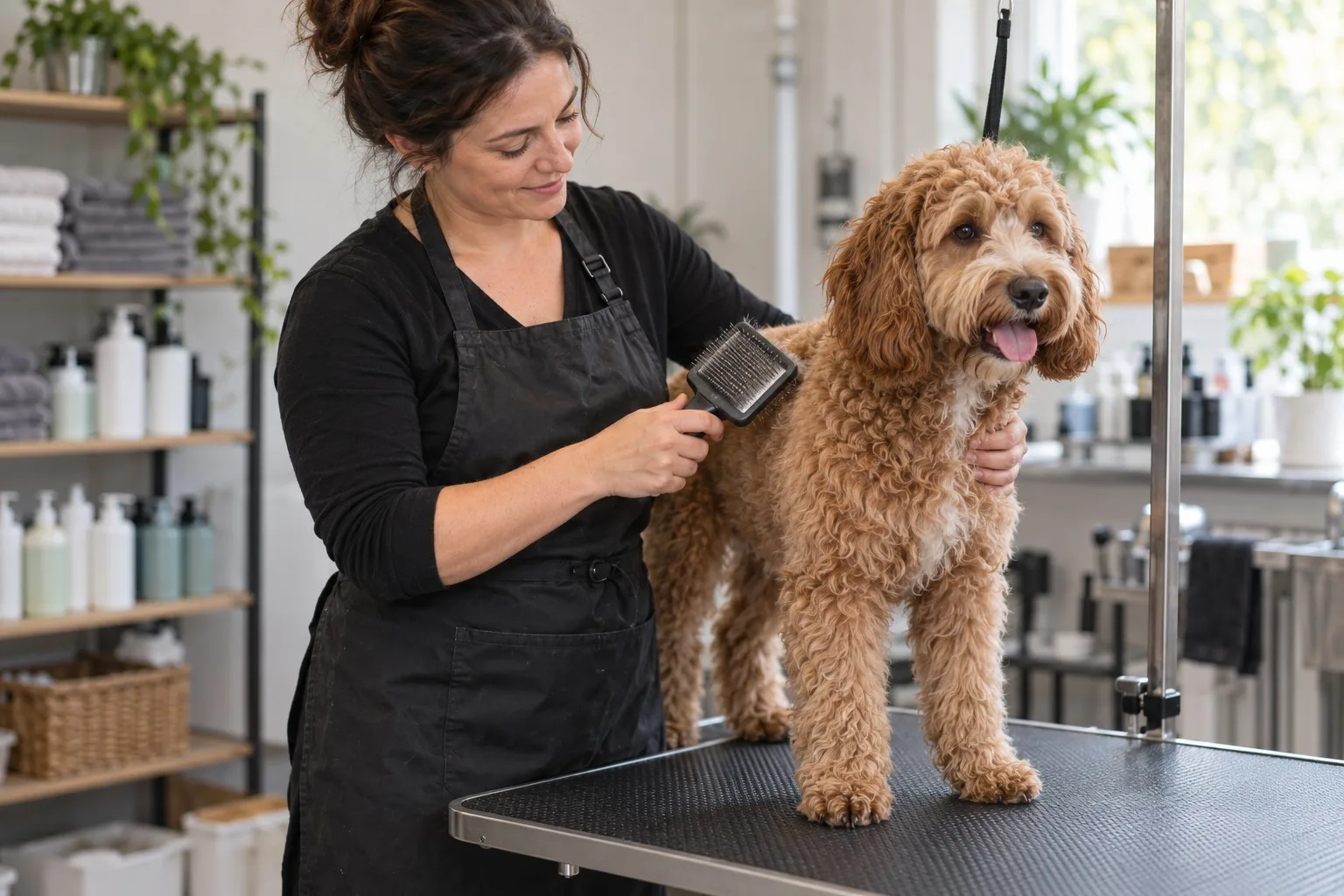
There is no universal best provider for a home salon, a mobile van and an employer with multiple groomers. Start by mapping the work you do to the policy sections that would respond.
| Possible event | Coverage to investigate | Decisive detail |
|---|---|---|
| A client slips on a wet reception floor | Commercial general liability | Bodily-injury terms, defense costs and the applicable deductible. |
| A dog is injured while being groomed | Animal bailee / care, custody or control, plus relevant professional liability | Whether the animal itself is covered and whether legal liability must be established. |
| You pay for urgent care without admitting fault | Veterinary expense reimbursement, if offered | A separate limit and deductible may apply; it is not the same as liability coverage. |
| Clippers, dryers or portable equipment are stolen | Business property or inland marine | Premises, transit, unattended-vehicle and theft conditions. |
| A grooming van is involved in a collision | Commercial auto and any needed vehicle/equipment coverage | Separate vehicle, fitted equipment and animals-in-transit questions. |
| An employee is injured at work | Workers’ compensation, subject to local requirements | Correct worker classification and state rules, not a blanket assumption. |
A large general-liability number on a quote does not establish an equally large benefit for a client’s injured pet. Animal-bailee coverage and veterinary reimbursement may have their own per-animal, per-occurrence and annual aggregate limits. Ask the agent to mark those figures separately on the quote.
Consider an illustrative salon incident affecting three dogs. If the animal-in-care benefit has one shared occurrence cap, three separate invoices may still compete for that cap. Ask how the contract groups losses, whether legal defense erodes a limit, and what happens after earlier claims have used some of the annual aggregate. No particular payout is implied by this scenario.
The official Pet Care Insurance materials reviewed describe separate animal-bailee and veterinary-reimbursement components. They are examples of why a line-by-line review matters, not a recommendation of that provider. Request the offered form and schedule; do not rely on inconsistent headline figures across marketing pages.
Ask about leased-space obligations, client slip-and-fall exposure, overnight holding, equipment and interruption after insured property damage. Give the insurer the actual premises and services.
Disclose whether clients’ pets are transported, whether staff drive, and which equipment is permanently fitted. A mobile-service liability label does not prove the van is insured for a road collision.
Tell both the home insurer and business insurer that customers and animals visit. Personal home coverage can leave business property and liability gaps.
Check that the named insured matches the trading arrangement and that temporary venues are within scope. Working only occasionally does not make an ordinary personal policy a business policy.
If you need cover for a grooming event or a single appointment day, ask whether short-term cover is actually available for professional grooming, rather than assuming an event policy includes the work. No daily product or price is verified here. Obtain written confirmation of the start and end time, venue, services, animals and people insured.
Ask how a claim reported after the insured day would be treated and whether the policy is occurrence-based or claims-made. With claims-made cover, reporting dates and any retroactive date can matter. A certificate of insurance summarizes evidence of cover; it does not amend exclusions or extend the insured activity.
If a venue asks to be an additional insured, have the agent confirm the correct endorsement and its scope. Do not assume simply typing the venue’s name on a certificate creates the required protection.
That is a separate question. Routine grooming should not be assumed to fall under accident-and-illness pet insurance. A wellness allowance would need to name the relevant service, while treatment of a skin or other medical condition is evaluated under its own policy rules. Buying a pet-health policy does not insure your grooming business.
This guide does not send a business-insurance shopper into a pet-health quote funnel. Use a licensed commercial-insurance professional to review the operation described above.
General liability, professional liability and property coverage categories.
Read source → NAIC small-business insurance guideBusiness-owner packages, commercial vehicles and home-business gaps.
Read source → Texas Department of Insurance: certificates of insuranceA certificate does not expand the coverage in an insurance contract; state-specific FAQ supports this narrow distinction.
Read source →